


Most back pain is not caused by a single dramatic injury. It builds quietly from habits that load the spine unevenly, and then the wrong response turns a short episode into a longer one. The good news is that many of the common mistakes that make back pain worse are reversible once you know what to change.
The same patterns show up often: a week of bed rest, a rushed return to heavy lifting, an MRI that becomes the whole story. In this guide, we break down the everyday mistakes that make back pain worse and what to do instead—by category, with specific adjustments you can start today.
Daily Habits and Posture Mistakes That Aggravate Back Pain
Prolonged Bed Rest
Rest feels like the natural response to back pain, but complete bed rest is one of the most reliable ways to prolong it. When you stop moving, the muscles that support your spine lose conditioning quickly, and stiffness builds in the joints and connective tissue. Research and clinical experience both point to the same conclusion: for most non-specific low back pain, staying gently active beats lying still.
Instead of bed rest, keep doing normal daily activities that do not sharply increase your pain. Short walks every hour, gentle hamstring and back stretches, and changing position often are more useful than lying flat. Limit complete rest to the first day or two after a severe flare, then progressively reload movement.
Sleeping on the Stomach
Sleeping on your stomach flattens the natural curve of your low back and forces your neck into a rotated position all night. That combination increases pressure on the facet joints at the back of the spine and can leave you stiffer in the morning. If you cannot sleep any other way, place a thin pillow under your lower abdomen and use a very low pillow under your head. Even better, shift to your side with a pillow between your knees, or on your back with a pillow under your knees.
Prolonged Sitting
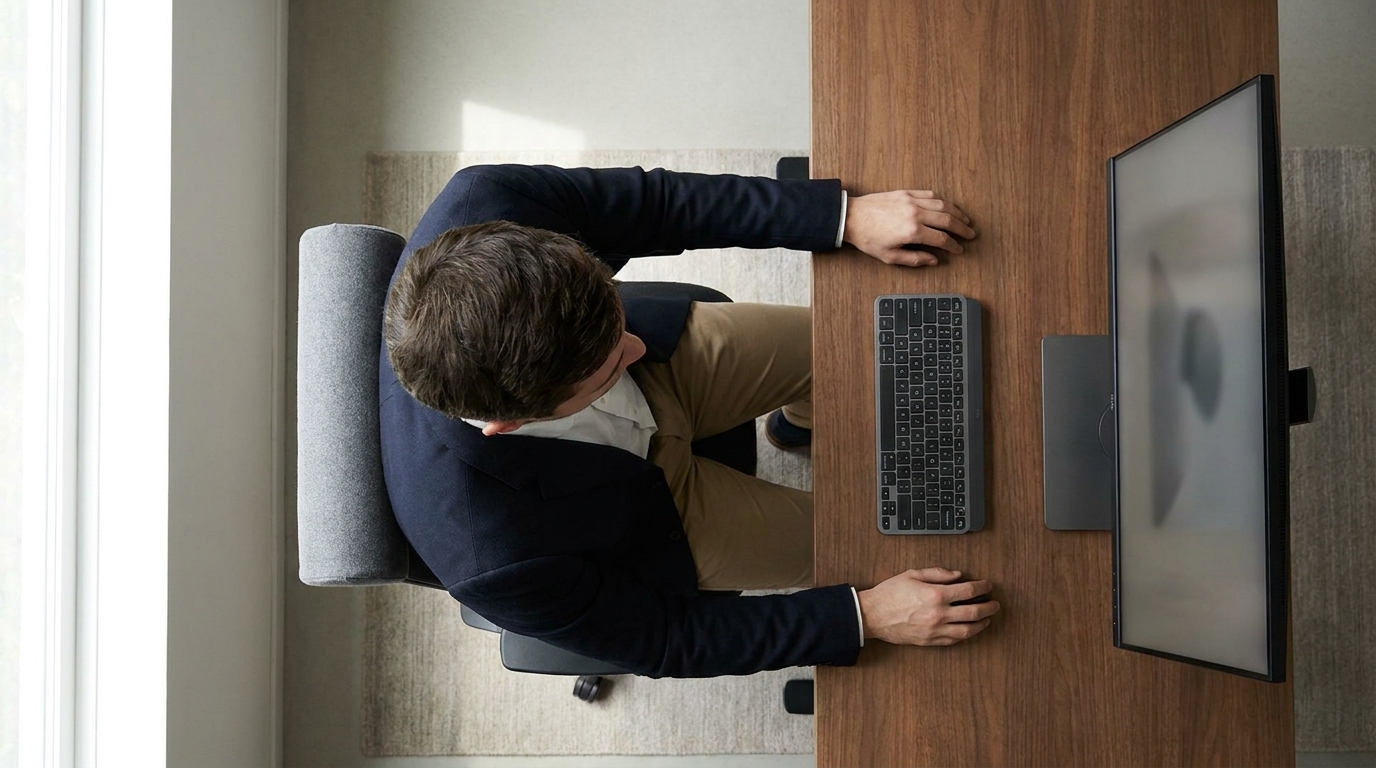
Sitting for hours increases pressure on the intervertebral discs compared to standing, especially when you slouch or sit with your hips rolled under. The hip flexors shorten, the glutes become inhibited, and the low back takes on more load. The fix is not a single perfect chair but a sequence of movement breaks. Try these adjustments:
- Stand and walk for one to two minutes every 30 to 45 minutes.
- Use a small lumbar roll or rolled towel behind the low back to keep the curve.
- Keep your feet flat on the floor and your screen at eye level.
- Shift between sitting and standing if you have a height-adjustable desk.
Repetitive Bending and Stooping
Every forward bend loads the discs and the ligaments at the back of the spine. When stooping is repeated dozens of times a day, that load accumulates. To break the pattern, hinge at your hips and bend your knees instead of rounding your low back. For low tasks, kneel on one knee or use a long-handled tool rather than bending from the waist. If you have to work at floor level, take frequent micro-breaks to stand and extend gently.

Movement and Exercise Mistakes That Worsen Back Pain
Improper Lifting and Twisting
Lifting with a rounded spine while twisting is one of the most damaging combinations for the discs. The outer fibers of the disc are under tension and compression at the same time, which can lead to a herniation or an acute flare. When you lift, get close to the load, brace your core, hinge at the hips and knees, and avoid twisting your trunk. Turn your feet in the direction you need to go instead of rotating at the waist.
For anything heavier than a light object, split the load or use a mechanical aid. If a lift causes sharp pain, stop and reassess rather than pushing through.
High-Impact Exercise
During an acute back pain episode, exercises that involve jumping, sprinting, heavy barbell lifts, or deep loaded spinal flexion can overload healing tissue. Golf, racket sports, and running often involve repeated rotational or compressive forces. Replace them temporarily with walking, swimming, or stationary cycling with an upright posture. A guided rehab program that builds core endurance and hip mobility is an even better bridge back to your sport.
High-impact activity is not forbidden forever; it just needs to be reintroduced after pain has settled and your trunk control has improved.
Returning to Activity Too Quickly
The fear of losing fitness pushes many people to resume full training the moment pain drops. But pain is only one signal; tissue tolerance and motor control often lag behind symptom relief. A sudden return to heavy loading can re-injure the area and create a cycle of chronic pain. Instead, use a graded progression: start with pain-free range of motion, add endurance, then strength, then sport-specific movements over days to weeks, not hours.
If you are unsure how fast to progress, a clinician can help you test each step with objective baselines.

Healthcare Decision Mistakes That Delay Recovery
Delaying Professional Assessment
Many back pain episodes do improve on their own, but waiting weeks without a clear diagnosis can allow a manageable problem to become a persistent one. Red flags—pain that wakes you at night, leg weakness, bowel or bladder changes, or trauma—need urgent assessment. Even without red flags, if pain is not improving after two to three weeks of self-care, a structured assessment can identify the movement or strength deficit that is driving the pain.
Seeking Advice from Unqualified Sources
Friends, family, and online forums often mean well, but their advice is based on one person’s experience, not your presentation. A generic list of stretches or the latest viral fix can irritate a sensitive spine. The same exercise that helps one person’s disc pain can aggravate someone with facet joint irritation. Use professional guidance that starts with a movement exam and a clear working diagnosis, then apply advice that matches your pattern.
Overemphasizing MRI Findings
An MRI is a powerful tool, but it shows anatomy, not pain. Many people with perfectly normal spines have severe pain, and many pain-free adults have disc bulges or degenerative changes on MRI. When the scan becomes the entire diagnosis, treatment can chase an image instead of the person. A clinical exam that reproduces your symptoms and tests your movement is the real foundation of a plan. Use MRI to confirm a suspicion or plan a procedure, not as the sole explanation for your pain.
At Fulcrum Therapy, we start with movement and symptom mapping before imaging so that the scan becomes a support, not a distraction. That approach helps us build a plan around what your body can do, not just what a report says.
Rushing into Spine Surgery
Except for severe or progressive nerve compression, most back pain responds to non-surgical care given enough time. Surgery can fix a structural lesion, but it does not automatically undo months of muscle weakness, stiffness, or fear of movement. A comprehensive rehab program is still needed afterward. The best surgical decision is one made after a trial of conservative care, a clear correlation between symptoms and the structural finding, and a shared decision with a surgeon.
Delaying Necessary Spine Surgery
There are times when delaying surgery is the mistake. If you have progressive leg weakness, loss of bowel or bladder control, or severe nerve compression that is not improving with non-surgical care, waiting can lead to permanent nerve damage. The goal is not to avoid surgery at all costs, but to time it correctly. If a surgeon recommends surgery, ask what happens if you wait, what the expected recovery is, and what non-surgical options remain. Sometimes the right answer is sooner, not later.

Pain Management and Treatment Adherence Pitfalls
Inadequate Pain Relief
Some people avoid pain medication because they worry it will mask the injury. That fear often backfires: uncontrolled pain causes guarding, poor sleep, and fear of movement, which slow recovery. Pain relief is not a weakness; it is a tool that lets you move enough to heal. Use over-the-counter options as directed, and consider ice or heat based on the stage: ice for acute inflammation, heat for chronic stiffness. If pain remains uncontrolled, speak with a clinician or pharmacist.
Not Completing Recommended Treatment
Stopping treatment when the pain drops is one of the most common reasons for recurrence. Pain is often the last symptom to appear and the first to leave, while strength and motor control deficits remain. If you stop after the first pain-free week, the underlying instability or weakness is still there. Complete the full course of rehab, including the final strengthening phase, and use your home exercise program as a maintenance tool. The goal is not just to feel better now, but to make the next flare less likely and less severe.
If you recognize any of these patterns in your own back pain, the next step is to change one habit today and build from there. When you are ready for a structured plan, we can help you move from avoiding mistakes to building resilience.