

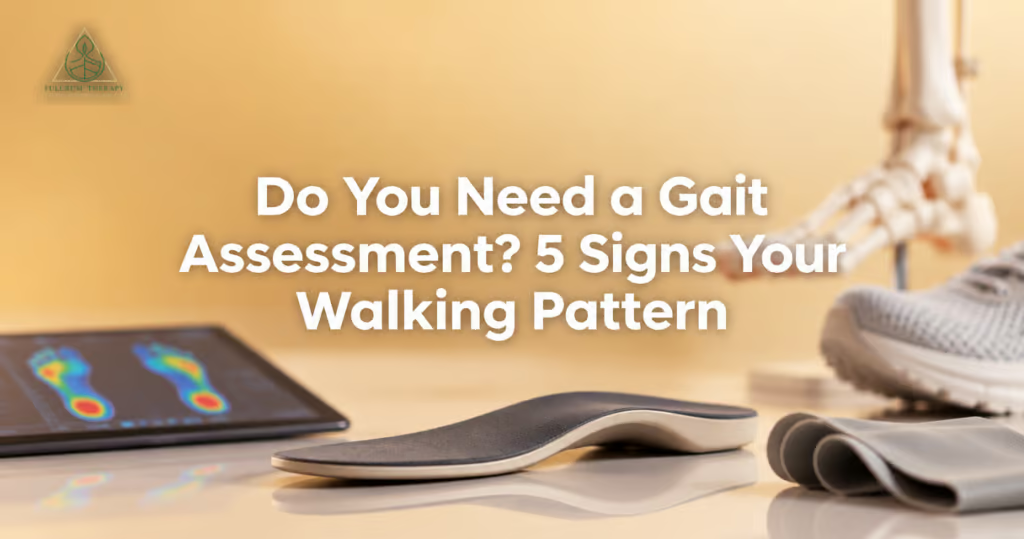
Walking is the most repeated load-bearing movement most of us do—thousands of steps a day, each one sending force through the feet, ankles, knees, hips, and lower back. When that pattern is efficient, the body absorbs and redirects force cleanly. When it is not, the same small asymmetry repeats step after step until it becomes pain or a stubborn injury. If you have been searching for the answer to Do You Need a Gait Assessment? 5 Signs Your Walking Pattern Is Causing Pain, the answer usually lies in what your body is already telling you.
A gait assessment is not reserved for elite runners or post-surgical patients. It is a structured way to see what your walking pattern is doing when you are not thinking about it. Below we walk through the five most common signs that your gait is behind your pain, what a clinical gait assessment actually involves, and how to use the results to move better.
What is a Gait Assessment?
A gait assessment is a systematic evaluation of how you walk—your step length, cadence, foot strike, arm swing, pelvic position, and the way force moves through each joint. The goal is not to label your walking as good or bad, but to find mechanical patterns that may be overloading certain tissues. We look at you walking at a comfortable pace, often from the front, side, and back, and we may use slow-motion video to catch details the naked eye misses.

Because walking is so automatic, most people are unaware of their own gait habits. A clinical assessment makes those habits visible. It can reveal why one side of your body works harder, why your shoes wear unevenly, or why pain appears only after a certain distance. This is more than symptom checking—it is a way to map the cause-and-effect chain between your walking pattern and your pain.
5 Signs Your Walking Pattern Is Causing Pain
Not every ache demands a gait assessment, but these five patterns are strong signals that your walking mechanics are worth a closer look. If you recognize one or more, it is time to stop guessing and start measuring.
Persistent Pain
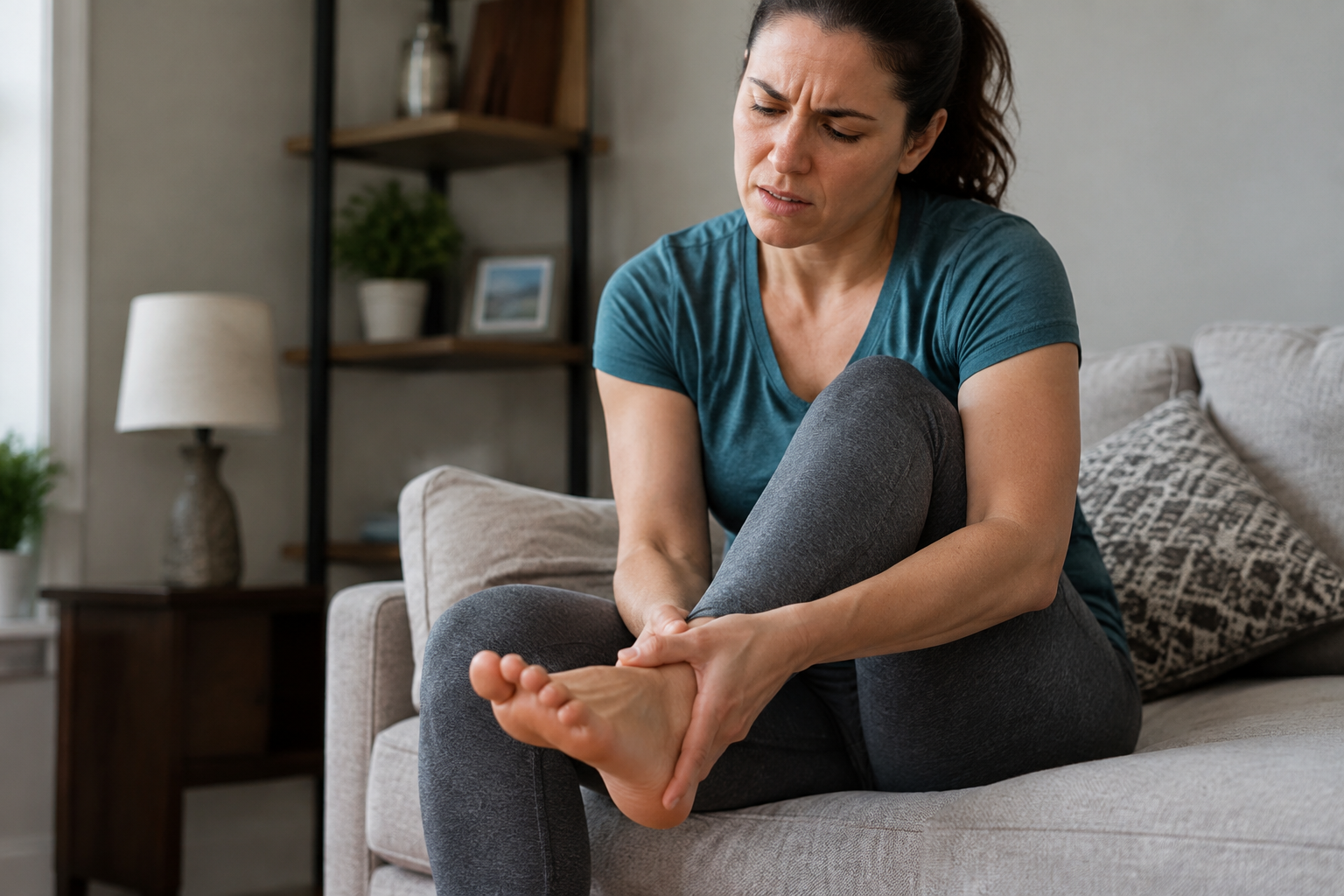
Pain that shows up during or after walking—and does not fully settle with rest—is one of the clearest signs that your gait may be part of the problem. Common locations include the arch or heel, the front of the shin, the outside of the knee, and the lower back. For example, persistent heel pain that is sharpest with the first few steps in the morning can be linked to how your foot loads and pushes off, especially if your arch tends to flatten or your ankle mobility is limited.
- Plantar heel pain that worsens with standing or walking can be worsened by excessive pronation or a stiff big toe joint.
- Knee pain on one side only may indicate a hip drop or a crossover gait that shifts extra force through the inside or outside of the knee.
- Lower back ache after long walks can come from a stiff pelvis or weak hip extension that forces the back to do more work.
Recurring Injuries
If the same injury keeps coming back after rest and treatment, the root cause may be a repeated gait pattern rather than a single bad step. Shin splints that return every time you increase walking volume, or a hamstring strain that never fully resolves, can signal that your stride is asking certain tissues to overwork. We commonly see this when hip extension is limited or when cadence is too low, which increases ground contact time and load on the legs.
- Plantar fasciitis that flares up every few months despite new shoes and rest.
- IT band irritation that returns on the same side after every return to walking or running.
- Chronic calf or Achilles tightness that improves with treatment but reappears within weeks.
Uneven Shoe Wear
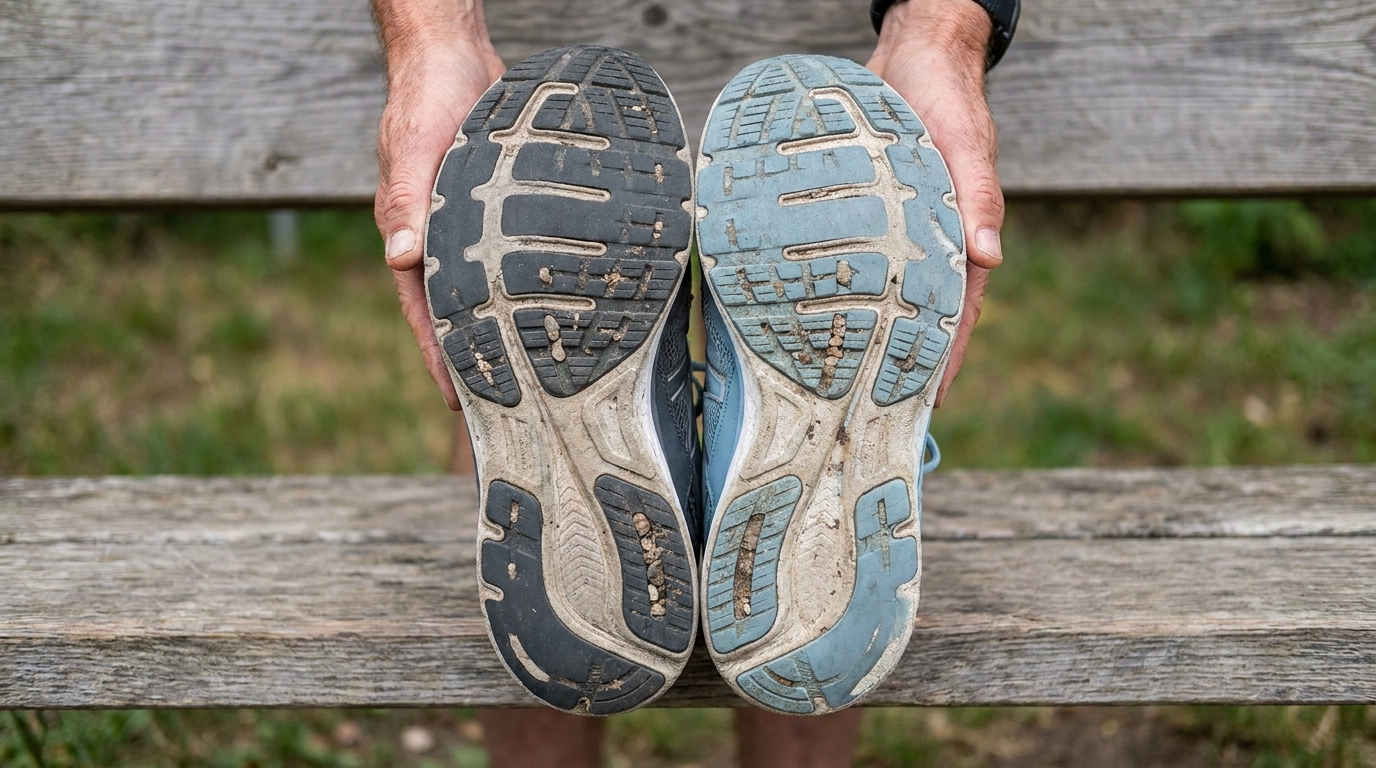
Your shoes are a record of how you load your feet. Flip them over and look at the soles. A wear pattern that is heavily biased to one edge—or very different between the left and right shoe—is a practical clue that your gait is not symmetrical. Excessive wear on the outer heel often points to a supinated or high-arched foot that does not absorb shock well, while heavy wear on the inner edge suggests overpronation, which can strain the arch and ankle.
- Outer heel wear can indicate a heavy heel strike or a rigid, high-arched foot that lands hard on the outside edge.
- Inner sole wear may mean your foot rolls inward too much, stretching soft tissues on the inside of the ankle.
- One shoe more worn than the other often reflects a leg length difference, a past injury, or a habit of favoring one side.
Noticeable Foot Sounds
The sound of your footsteps is a surprisingly reliable indicator of how your foot is meeting the ground. A sharp slapping sound often means your foot is landing too flat or your shin muscles are not controlling the forefoot descent. Scuffing or dragging may point to a weak foot dorsiflexor or a stride that does not clear the ground cleanly. These sounds tend to get louder as you fatigue, which is why we listen for changes at the end of a longer walk or run.
- Slapping during walking or running can indicate weak anterior tibialis control or an overly long stride.
- Scuffing one toe after the other may be a sign of reduced ankle dorsiflexion or a stiff hip.
- Heavy, pounding footfalls suggest poor shock absorption and may correlate with higher impact forces through the shins and knees.
Hitting a Performance Wall
If you train consistently but your pace, distance, or recovery has plateaued, your gait may be the invisible limit. Even small inefficiencies—excessive vertical bounce, a narrow crossover step, or a weak toe-off—waste energy and make every kilometre harder than it should be. A gait assessment can identify where your movement chain is leaking energy, allowing you to make targeted changes instead of simply adding more volume.

What to Expect During a Gait Assessment
If any of those signs sound familiar, the next step is understanding what the assessment actually involves. It is not a single machine or a quick glance—it is a structured conversation between your history, your symptoms, and your movement. Most assessments take between 30 and 60 minutes, and you do not need any special preparation. Wear the shoes you walk or run in most often, and bring a pair of shorts if possible so your knees and ankles are visible.
At Fulcrum Therapy, we combine 60+ years of clinical experience across chiropractic, physiotherapy, massage, and kinesiology to look at your whole movement system, not just the painful spot.
Medical History and Symptom Discussion
We start by asking about when the pain began, what makes it worse, what has been tried, and what your daily movement looks like—your typical step count, footwear, training load, and any past injuries. This background helps us connect the dots between your walking pattern and your symptoms. It also tells us what not to assume: a knee that hurts on stairs may reveal a completely different gait issue than one that hurts only after a long walk.
Physical Observation and Functional Tests
Next, we watch you walk at your normal pace, often from several angles. We may ask you to speed up, slow down, walk on your toes or heels, or step over an obstacle. If running is part of your pain, we may assess you on a treadmill. We often record a short video and play it back in slow motion so you can see exactly what we see—a foot that collapses inward, a hip that drops, or an arm swing that drives too much rotation.
We also check the supporting pieces: ankle range of motion, single-leg balance, hip strength, and core control. These are not separate from your gait; they are what your gait is built on.

Personalized Recommendations and Follow-Up
After the assessment, we interpret the findings with you. You leave with a clear picture of what your walking pattern is doing, why it may be contributing to your pain, and what to change first. That may include specific exercises to strengthen a weak link, hands-on treatment to free up a stiff joint, a cue to shorten your stride or increase cadence, or a recommendation to adjust your footwear. We always schedule a follow-up so we can recheck your movement and make sure the changes are translating into less pain and better function.
Take the Next Step Toward Pain-Free Walking
If one or more of these five signs describes you, do not wait for the pain to become louder or the injury to return. A gait assessment gives you a baseline and a plan—not another guess. Small changes in how you load each step can make a meaningful difference in how you feel at the end of the day.
Book a gait assessment with our team. We will help you understand your walking pattern and give you a specific, personalized plan to move with less pain and more confidence.