


Lingering neck pain after a car accident is often dismissed as something that will fade on its own. In most whiplash injuries, the initial soreness peaks within 24 to 72 hours as inflammation builds, but when discomfort persists for weeks or months, it signals that the soft tissues, joints, or nerves in the cervical spine have not healed properly. Recognising the signs you need professional treatment for whiplash is the first step toward preventing long-term dysfunction.
Whiplash occurs when the head is thrown rapidly backward and then forward, stretching muscles, ligaments, and facet joints beyond their normal range. A rear-end impact at just 15 mph can force the neck through its full range of motion in under half a second. Because adrenaline masks pain at the scene, many people feel fine immediately after a collision and only notice symptoms days later. That delay is normal, but ongoing pain is not.
Understanding Lingering Neck Pain After a Car Accident
Whiplash is a soft-tissue injury, but the term covers damage to muscles, tendons, ligaments, intervertebral discs, and facet joints. The cervical spine has seven vertebrae, and each is connected by structures that can be strained in a collision. While many people recover within a few weeks, research shows that a significant minority experience symptoms that last for months or even years. Persistent neck pain after a car accident is not a sign of weakness or overreaction; it is a signal that the injury has moved beyond the acute phase and may require structured rehabilitation.

Common Symptoms of Lingering Whiplash
Symptoms of whiplash often start within days, but lingering whiplash presents with a distinct pattern that can be grouped into musculoskeletal and neurological categories.
Musculoskeletal Symptoms
- Neck stiffness or reduced range of motion that does not improve
- Pain that worsens with neck movement or after prolonged sitting
- Tenderness or pain in the shoulder, upper back, or between the shoulder blades
- Headaches that start at the base of the skull and radiate forward
- A feeling of heaviness or tightness in the neck and upper back
Neurological Symptoms
- Tingling, numbness, or burning sensations in the arms, hands, or fingers
- Weakness when gripping objects or lifting the arms
- Dizziness, blurred vision, or ringing in the ears
- Difficulty concentrating, memory problems, or irritability
- Electric shock–like sensations down the spine when bending the neck
Red Flags: When to Seek Immediate Medical Attention
While most lingering whiplash symptoms are not emergencies, certain signs require urgent evaluation in an emergency department. These red flags may indicate spinal cord involvement, nerve root compression, or a fracture that was missed initially.
- Weakness, numbness, or tingling in both arms or in the legs
- Loss of bladder or bowel control
- Severe midline neck pain that is tender to the touch
- An electric shock sensation running down the spine when you bend your neck
- Difficulty walking, loss of balance, or sudden loss of coordination
If any of these symptoms appear after a car accident, do not wait for a routine appointment. Immediate imaging and assessment are necessary to rule out serious structural damage.

Signs Your Neck Pain Requires Professional Evaluation for Whiplash
Not all lingering neck pain requires emergency care, but many people delay seeking help because they assume the pain will eventually resolve. If you recognise the following patterns, a professional evaluation is warranted.
Pain Lasting More Than a Few Weeks
Most whiplash injuries improve significantly within two to four weeks. If neck pain, stiffness, or headaches persist beyond that window, the body has not completed the healing process. By six weeks, scar tissue begins forming in damaged soft tissue, making range of motion harder to restore. Early intervention with a clinician can address movement restrictions before they become permanent.
Increasing Intensity
Pain that worsens over time rather than gradually easing is a warning sign. Whiplash symptoms often peak within the first week and then decline, but if the pain intensifies or spreads to new areas, it suggests an underlying injury such as a disc herniation or facet joint irritation that is not improving on its own.
New or Worsening Symptoms
Delayed symptoms are common after a collision, but new symptoms that appear weeks later—such as numbness in the arm, blurred vision, or headaches that change in character—indicate that the injury is progressing. Similarly, symptoms that initially improved but then returned with greater intensity should be reassessed. These changes are not typical of normal healing.
Underlying Injuries That Can Cause Persistent Neck Pain
Whiplash is often described as a neck sprain or strain, but the force of a collision can damage several specific structures. Identifying the exact source of persistent pain requires a clinical examination and often imaging, because different injuries require different treatment approaches.
Herniated Discs
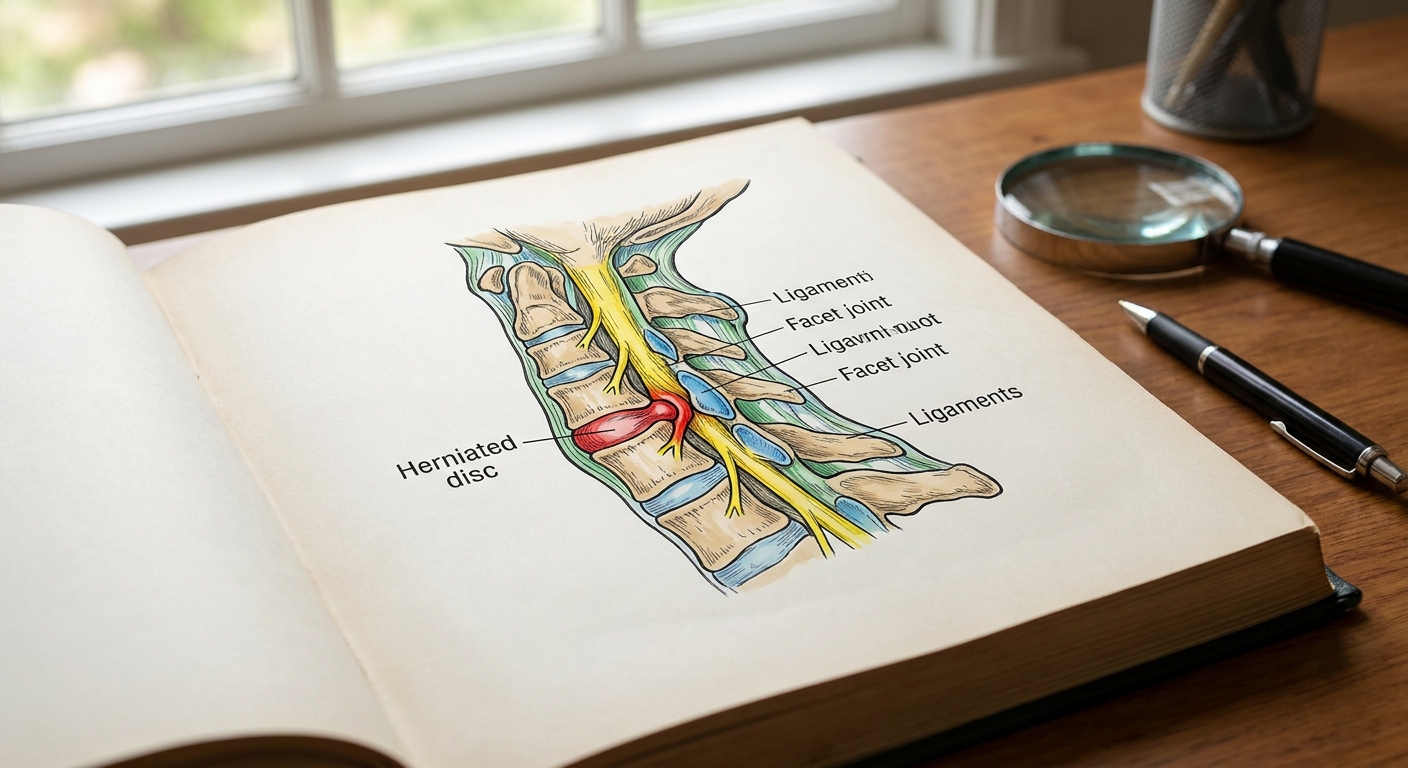
The intervertebral discs act as cushions between the vertebrae. A sudden forceful neck movement can cause a disc to bulge or tear, pressing on a nerve root. This often produces pain that radiates down the arm, along with numbness or tingling in the hand. A herniated disc may not be visible on a basic X-ray and typically requires MRI for diagnosis.
Facet Joint Damage
Facet joints are small paired joints at the back of each vertebra that guide neck movement. During whiplash, these joints can be compressed or irritated, and damage to the cartilage or joint capsule is a frequent source of persistent neck pain. Facet joint pain often feels like a deep ache on one side of the neck, made worse by turning the head or looking up.
Ligament Tears
Ligaments hold the vertebrae in alignment and provide stability. When they are stretched beyond their limit or torn, the cervical spine may become unstable, leading to pain that worsens with activity and a feeling that the neck cannot support the head. Ligament injuries can be difficult to detect without specialised imaging, but they are a common cause of ongoing whiplash symptoms.
Risk Factors for Chronic Whiplash Pain
Some people are more likely to develop persistent pain after a whiplash injury. Understanding these risk factors can help you recognise the need for early professional care.
Age
As we age, the discs and ligaments in the cervical spine lose some of their natural elasticity. People over 50 are more likely to experience prolonged symptoms after a collision because their tissues are less able to absorb and recover from the rapid stretch. Pre-existing cervical arthritis can also make the injury more painful and slower to resolve.
Previous Neck Injuries
Having had a previous whiplash injury or existing neck pain increases the risk of chronic symptoms. The musculature and connective tissues may already be compromised, leaving less reserve to handle a new trauma. A history of neck problems means even a low-speed collision can trigger significant pain.
High-Speed Collisions
Higher impact speeds generally produce more severe whiplash injuries. The force transmitted to the neck is greater, and the risk of structural damage to discs, facet joints, and ligaments increases. However, even low-speed collisions can cause persistent pain, especially when the head restraint is set too low or the occupant is turned or looking away at the moment of impact.
Long-Term Consequences of Ignoring Lingering Neck Pain
Ignoring persistent neck pain after a car accident can lead to complications that extend far beyond the initial injury. The following are common long-term outcomes when whiplash is left untreated.
Chronic Pain
Untreated whiplash can transition into chronic pain, defined as pain lasting longer than three months. Chronic neck pain often involves changes in the nervous system that make the body more sensitive to pain signals, a process known as central sensitisation. Once this occurs, the pain becomes more difficult to treat and can affect sleep, work, and mental health.
Reduced Mobility
Scar tissue and joint stiffness can permanently limit neck range of motion. Over time, reduced mobility in the cervical spine can cause compensatory strain in the shoulders, upper back, and even the lower back, leading to a cycle of dysfunction. Early rehabilitation is key to preserving normal movement.
Neurological Issues
Persistent nerve root compression from a herniated disc or inflammation can cause lasting numbness, weakness, or altered sensation in the arms and hands. In rare cases, chronic pain and neurological symptoms can lead to cognitive difficulties such as memory problems, difficulty concentrating, and mood changes. Addressing the underlying injury early reduces the risk of these complications.

Professional Treatment Options for Whiplash
Evidence-based treatment for lingering whiplash focuses on restoring movement, reducing pain, and strengthening the supporting structures of the neck. A multimodal approach is often most effective, and the right combination depends on the specific injury.
Physiotherapy
Physiotherapy is a cornerstone of whiplash rehabilitation. A physiotherapist will assess your range of motion, muscle strength, and movement patterns, then design a progressive exercise program to restore function. Manual therapy techniques such as joint mobilisation and soft tissue release are commonly used alongside targeted exercises to reduce pain and improve mobility. The goal is not just symptom relief but rebuilding the neck’s capacity to handle daily loads.
Chiropractic Care
Chiropractic care focuses on the diagnosis and treatment of musculoskeletal disorders, particularly those involving the spine. For whiplash, a chiropractor may use gentle spinal adjustments to improve joint mobility, reduce muscle spasm, and alleviate nerve irritation. Chiropractors are also trained to identify when imaging or referral to another specialist is necessary. Regular reassessment ensures that the treatment plan evolves as the injury heals.
Pain Management
For some patients, pain management strategies are needed to break the cycle of chronic discomfort. This may include medications prescribed by a physician, injection-based therapies for facet joint or nerve root pain, or referral to a pain specialist. Pain management is often used alongside physical rehabilitation to allow the patient to participate fully in exercise and manual therapy. We coordinate with your existing care providers to create one unified plan that addresses all aspects of your recovery.
If any of the signs above describe your experience after a car accident, don’t wait to see whether the pain fades on its own. A thorough assessment can identify the underlying injury and set you on a path to lasting recovery. Contact us to book a comprehensive whiplash evaluation and take the first step toward moving without pain.