


Pain at the base of your neck is rarely random. This junction—where the upper back meets the skull—carries the weight of your head, coordinates nearly every head movement, and anchors muscles that also influence your shoulders and jaw. When everyday habits like slouching at a desk, cradling a phone, or holding stress in your shoulders overload this area, the tissues respond with stiffness, ache, or sharp pain. Understanding the anatomy and common triggers is the first step toward lasting relief.
The base of the neck is particularly vulnerable because it sits at a transition point: the flexible cervical spine above, the more rigid thoracic spine below, and a dense cluster of nerves, discs, and muscles in between. In this article, we break down the causes, symptoms, and the moments when chiropractic care can help you move without pain again.

Anatomy of the Base of the Neck
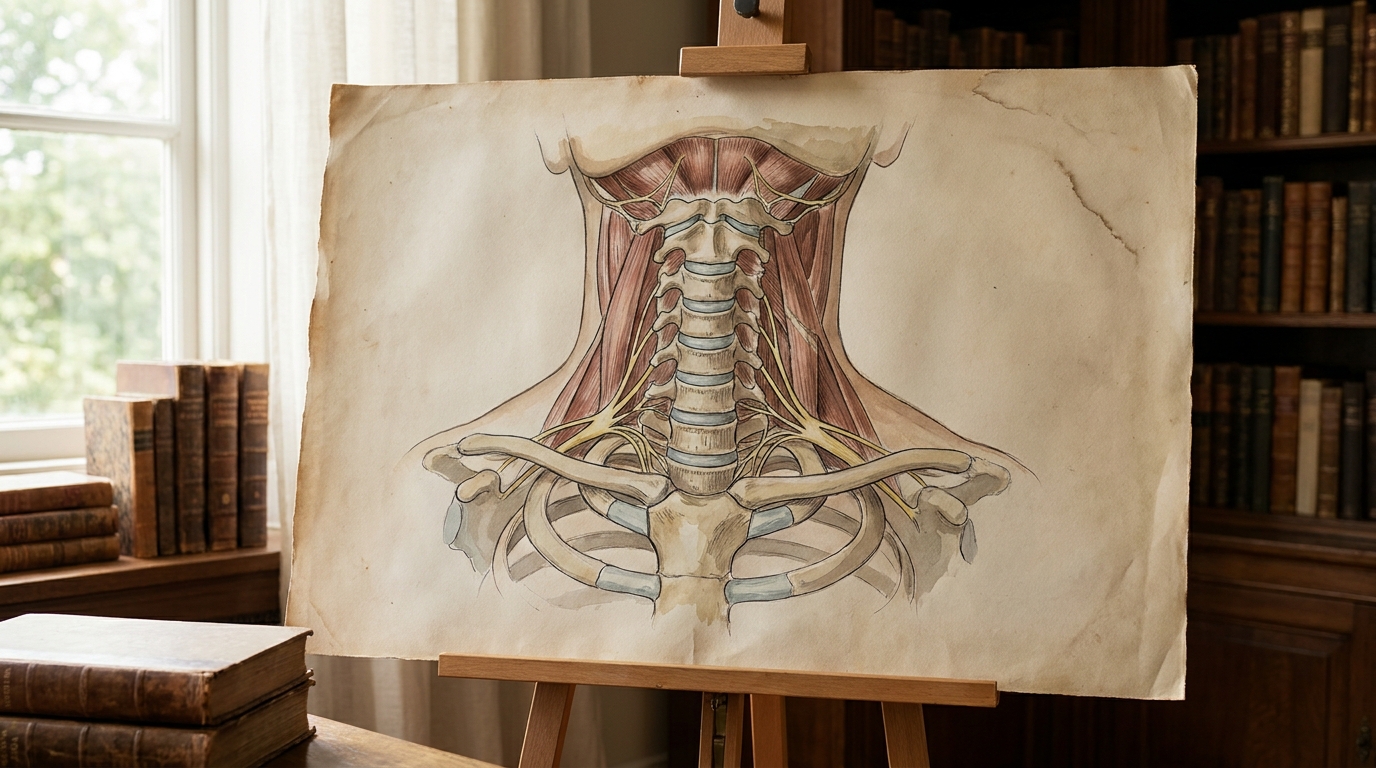
Your cervical spine has seven vertebrae (C1–C7). The base of the neck typically refers to the lower cervical vertebrae (C5–C7) and the top of the thoracic spine (T1), where the neck transitions into the upper back. This region supports a head that weighs about 12 pounds—roughly the weight of a bowling ball. Small muscles called the suboccipitals, along with larger muscles like the upper trapezius and levator scapulae, attach here to control fine head movements and stabilize the spine. Between each vertebra, discs act as shock absorbers and create space for spinal nerves to exit and travel down the arms. When posture shifts the head forward, the effective load on these structures increases dramatically, which is why the base of the neck often becomes a pain generator.
Common Causes of Pain at the Base of the Neck
Several everyday factors can overload the base of the neck. In our clinical experience, most cases stem from a combination of postural habits and cumulative strain rather than a single dramatic injury.
Poor Posture and Tech Neck
Forward head posture—often called tech neck—is one of the most common contributors. For every inch the head moves forward past the shoulders, the apparent weight on the cervical spine increases. Muscles at the back of the neck and upper back must work harder to hold the head up, leading to fatigue, tightness, and pain at the base of the skull.
Muscle Strain and Overuse
Holding one position for too long, repetitive overhead or computer work, or even carrying a heavy bag on one shoulder can strain the muscles that attach at the base of the neck. Overuse causes micro-tears and inflammation, producing a dull ache that worsens with certain movements.
Degenerative Conditions (Arthritis and Disc Issues)
As we age, the discs between vertebrae lose hydration and height. This can narrow the spaces where nerves exit, leading to irritation or compression. Osteoarthritis may also develop, causing bone spurs and stiffness. Degenerative disc disease in the lower cervical spine often presents as a deep ache at the base of the neck that may radiate into the shoulders or arms.
Injury and Trauma
Whiplash from a car accident, a fall, or a sports collision can strain the ligaments and muscles at the base of the neck. Even a mild injury can leave lingering stiffness and sensitivity if not properly rehabilitated.
Stress and Tension
Many people hold stress in their shoulders and neck. Chronic shoulder hitching or clenching the jaw tightens the upper trapezius and suboccipital muscles, creating a constant pull at the base of the skull. Over time, this tension becomes a source of pain and headaches.
Sleeping Position
Sleeping on your stomach forces your head to stay turned to one side for hours, placing sustained stress on one side of the neck. A pillow that is too high or too flat can also push the neck into an awkward angle, leading to morning pain at the base of the neck.

Symptoms of Pain at the Base of the Neck
Symptoms vary depending on the underlying cause and whether nerves are involved. Common complaints include:
- Dull, aching pain at the base of the skull or top of the shoulders
- Stiffness and reduced range of motion, especially when turning the head or looking up
- Sharp pain with specific movements, such as checking a blind spot
- Headaches that start at the base of the skull and radiate over the top of the head
- Radiating pain, tingling, numbness, or weakness into the shoulders, arms, or hands (a sign of nerve involvement)
If you experience radiating symptoms, weakness, or pain that doesn’t improve within a few days, it’s time to consider professional evaluation.

When to See a Chiropractor
Not every ache requires immediate care, but certain patterns should prompt a visit. You should see a chiropractor if:
- Pain lasts longer than a few days or keeps coming back
- You have difficulty turning your head, driving, or working
- Pain radiates into your shoulder, arm, or hand, or you feel tingling, numbness, or weakness
- You recently experienced a fall, car accident, or sports injury
- Headaches accompany your neck pain
- Sleep is disturbed by discomfort
Potential Complications of Untreated Neck Pain
Ignoring persistent base-of-neck pain can lead to more than just discomfort. Ongoing joint restriction and muscle guarding can change how you move, placing extra load on adjacent areas and creating a cycle of compensation. If a nerve is being compressed, delayed treatment may lead to persistent numbness, muscle weakness, loss of grip strength, or chronic pain. Early evaluation often leads to faster recovery and reduces the risk of long-term dysfunction.
How a Chiropractor Can Help
Diagnosis and Evaluation
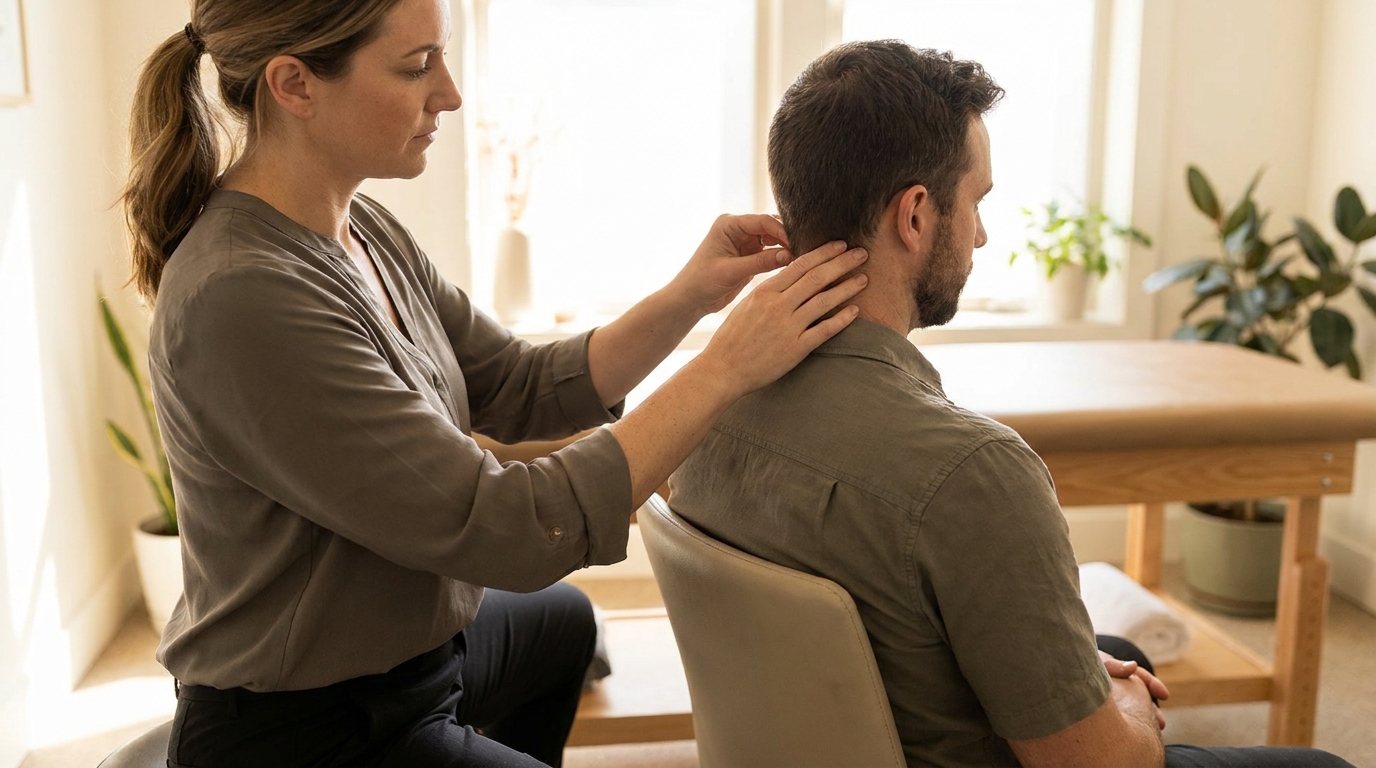
A chiropractic assessment for pain at the base of the neck goes beyond simply feeling where it hurts. We begin with a detailed history—when the pain started, what makes it better or worse, and any associated symptoms. Then we assess posture, range of motion, muscle strength, and nerve function. Palpation of the joints and soft tissues helps identify restricted segments and tender trigger points. In some cases, imaging may be recommended if the presentation suggests structural involvement. This process allows us to pinpoint whether the pain is primarily muscular, joint-related, or nerve-related, which guides the treatment plan.
Treatment often includes manual adjustments to improve joint mobility, soft tissue techniques to release tight muscles, and specific exercises to strengthen postural support. With 60+ years of combined experience, our team has seen many variations of this condition, but every care plan is built around your specific movement patterns and goals.
Take the Next Step Toward Relief
If pain at the base of your neck is affecting your ability to work, sleep, or enjoy daily activities, we invite you to book an assessment. A chiropractor can identify the source of your discomfort and create a plan that fits your body and goals. Relief is possible—often without surgery—and the first step is understanding what is really going on.