

Professional running gait analysis vs. shoe store treadmill check: what’s the difference? Many runners assume both provide the same insight, but the gap is significant. A quick treadmill check at a retail store is designed to help you choose a shoe, while a professional analysis is designed to understand how your whole body moves and why. Knowing what each test actually measures can prevent you from buying the wrong shoe or ignoring a movement fault that later becomes an injury.
At a shoe store, the focus is on arch type and visible pronation captured during a short treadmill run. A professional running gait analysis goes deeper—examining hip, trunk, and foot mechanics, testing muscle strength and joint mobility, and producing a plan you can act on. In this guide, we’ll break down exactly what happens in each setting and help you decide which route fits your goals.
Understanding the Basics
What is a Shoe Store Treadmill Check?
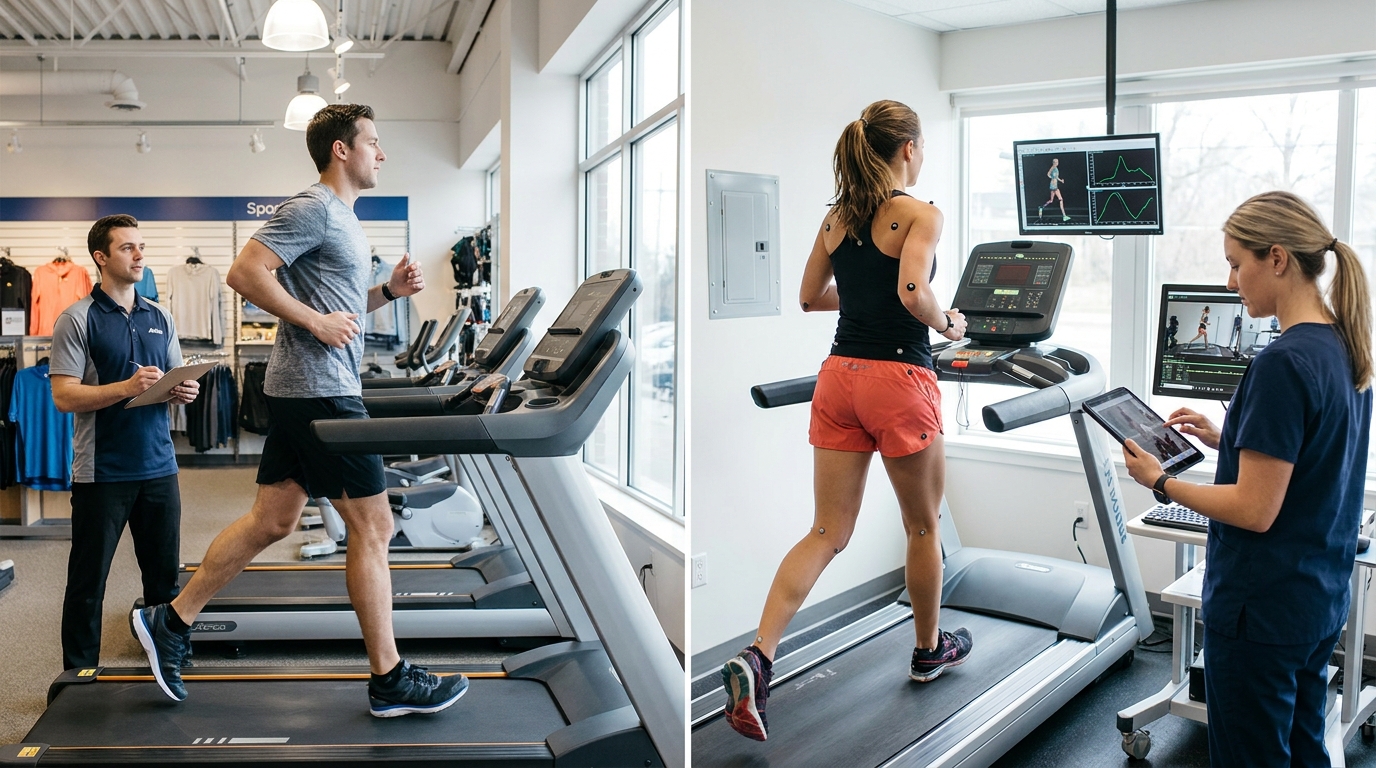
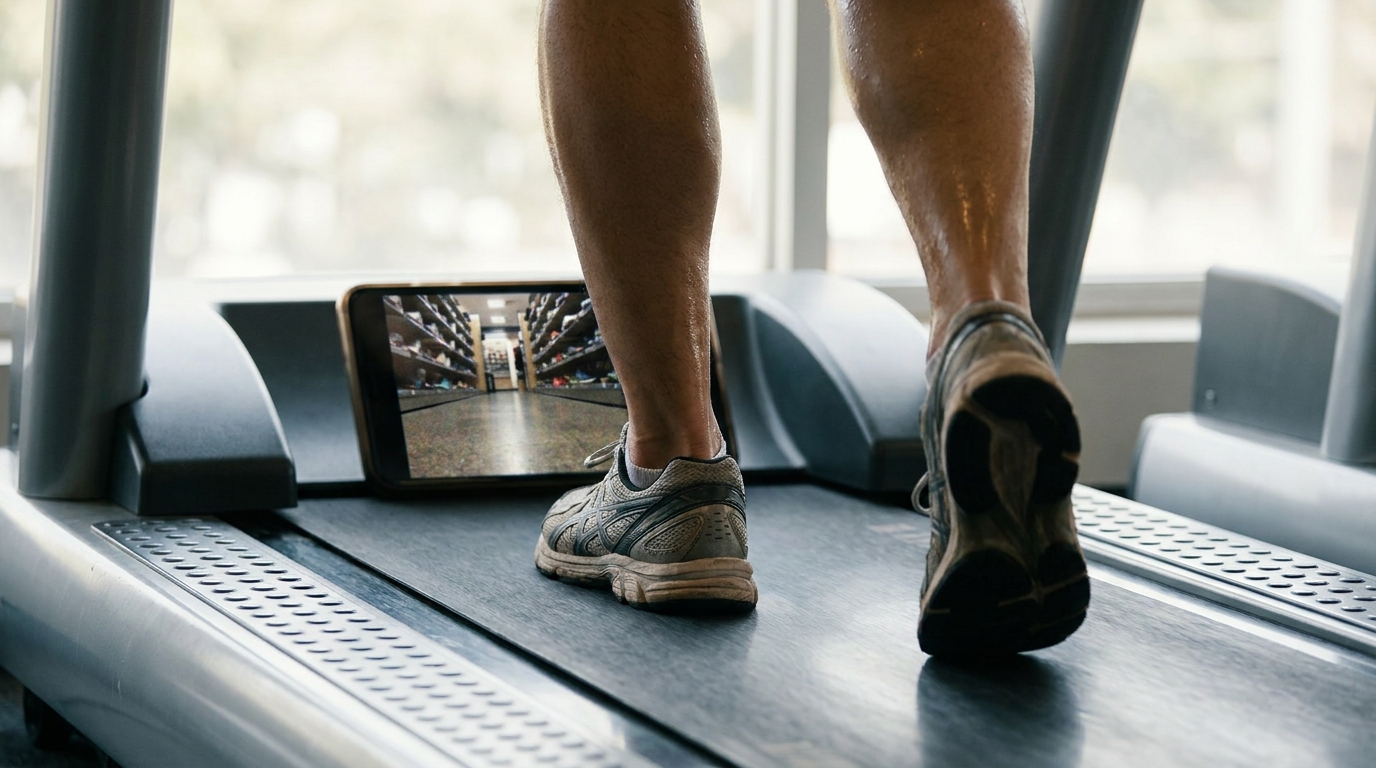
A shoe store treadmill check is typically a quick, service-oriented assessment performed in a retail running environment. You run briefly on a treadmill—often 15 to 60 seconds—while a staff member records your feet from behind or uses a basic camera app. The focus is on classifying your arch type and pronation pattern: neutral, overpronation, or underpronation (supination). Based on that visual or semi-automated read, the staff member recommends a shoe category such as neutral, stability, or motion control. Some stores add a static foot scan to measure arch height and foot shape, but the core output remains a shoe recommendation, not a clinical diagnosis. We have observed that many runners leave with a shoe label but little understanding of why their body moves that way.
What is Professional Running Gait Analysis?
Professional running gait analysis is a clinical assessment, usually performed by a physiotherapist, chiropractor, or kinesiologist in a treatment setting. It goes beyond foot classification to examine how your entire body contributes to running mechanics. The process typically includes a movement history, joint and muscle testing, video analysis from multiple angles, and sometimes specialized equipment to measure forces and joint angles. The goal is to identify asymmetries, compensation patterns, and inefficiencies that could increase injury risk or limit performance. At our clinic, we combine hands-on clinical testing with video review, because the visual record alone rarely tells the full story. The output is a detailed report and an action plan—not just a shoe recommendation.
Key Differences in Approach
Methodology: Visual Observation vs. Quantitative Analysis
Shoe store checks rely primarily on visual observation, even when a camera is used. The staff member watches how your foot lands and rolls, often slowing down a short video clip. Their training is typically focused on shoe fitting, not movement pathology. Professional gait analysis uses a structured clinical methodology. We start with a subjective history, then perform objective tests—range of motion, muscle length, strength, and motor control—before observing you run. The observation is paired with measurable data points, such as step rate, stance time, or joint angle changes, which makes the findings reproducible and comparable over time.
Depth of Analysis: Feet vs. Whole Body
A shoe store check zeroes in on your feet and ankles, sometimes your lower legs. It rarely examines your hips, pelvis, trunk, or arms, even though running involves the entire kinetic chain. Professional running gait analysis considers the whole body. A knee that dives inward, a hip that drops, or a stiff thoracic spine can all change how your foot hits the ground. By looking upstream, we can find the reason behind a problem rather than just labeling the symptom. For example, an apparent overpronation at the foot may actually be driven by weak hip abductors, not by the foot itself.
Accuracy and Reliability of Results
The reliability of shoe store checks varies widely because it depends on the experience of the staff member and the quality of the recording. A study or two aside, many in-store assessments are not validated against clinical gold standards. Professional gait analysis, when performed with standardized protocols and experienced clinicians, yields more consistent and actionable results. The key advantage is not the technology alone but the clinical reasoning behind it: we interpret the data in the context of your injury history, training load, and goals. That reduces the chance of a mislabel.
Technology and Equipment Used
Shoe stores often use a treadmill, a smartphone or basic video camera, and sometimes a 3D foot scanner. These tools are good for capturing foot shape and basic motion, but they rarely measure force, timing, or three-dimensional joint movement. Professional analysis may use high-speed video, pressure-sensitive walkways, or force plate–instrumented treadmills, though not every clinic has the same equipment. In our setting, we use video analysis from rear and side views plus manual muscle testing, because that combination is accessible yet still far more detailed than a store check. The equipment matters less than how the data is interpreted, but even simple clinical tools outperform a one-angle camera.
What Each Can Identify
Shoe Store Check: Basic Pronation and Arch Type
A shoe store treadmill check can identify your general arch height—low, normal, or high—and whether your foot appears to roll inward excessively, stay neutral, or roll outward. It can also give a rough sense of your foot strike pattern: heel, midfoot, or forefoot. These observations are useful for narrowing down shoe options within a limited product range. However, they are not diagnostic. The same runner can be classified differently on different days or by different observers, and the labels “overpronator” or “supinator” do not necessarily predict injury risk or shoe need.
Professional Gait Analysis: Comprehensive Biomechanical Faults
A professional analysis can identify a much wider range of issues. We look for hip drop, knee valgus, excessive pelvic rotation, trunk lean, arm swing asymmetry, stride overstriding, cadence abnormalities, and limited ankle dorsiflexion. We also test for muscle imbalances—such as tight hip flexors or weak glutes—that may not be visible in a short treadmill clip. The analysis can highlight why you have recurring shin splints, runner’s knee, or Achilles issues, and it provides a baseline to measure improvement after treatment or training changes.
Pros and Cons of Each
Benefits of Professional Gait Analysis for Injury Prevention and Performance
Professional gait analysis gives you a comprehensive picture of how your body moves under load. That information can help you target weak areas before they become injuries, choose footwear that supports rather than masks a problem, and adjust your training to improve efficiency. Because the findings are quantified or at least documented, you can track progress. In our experience, runners who combine a gait analysis with individualized strengthening exercises see faster improvements than those who change shoes alone.
In our clinic, we combine running gait analysis with hands-on clinical testing because we have found that a shoe recommendation alone rarely solves the underlying movement problem.
Limitations of Shoe Store Treadmill Checks
The main limitations are shallow depth, inconsistent observer judgment, and a shoe-first agenda. The assessment is designed to sell you a shoe, not to diagnose or treat movement dysfunction. It typically ignores the hips and trunk, does not test muscle strength or joint range of motion, and may misclassify your foot type if you are fatigued, wearing unfamiliar shoes, or running differently on a store treadmill than you do outdoors. Also, a five-second clip cannot capture how your mechanics change over a long run.
Common Misconceptions About Store Treadmill Checks
One common misconception is that the treadmill readout tells you exactly which shoe to buy. In reality, the recommendation is often based on a broad category and may not account for your injury history, training surface, or goals. Another misconception is that a normal arch or neutral pronation means you are injury-proof. Many runners with “neutral” feet still have hip or trunk deficits that contribute to injury. Finally, some runners believe the analysis is a medical diagnosis. It is not; it is a retail service with valuable but limited information.
Making the Right Choice for You
When to Choose a Shoe Store Check
A shoe store check makes sense when you are new to running, need a recommendation among a specific store’s inventory, or simply want a second opinion on shoe category without a medical concern. If you have no current pain, no significant injury history, and your main goal is to buy a comfortable shoe, a quick treadmill check can be adequate. It is also useful to compare how different shoes feel on a treadmill. However, treat the result as a starting point, not a definitive answer.
When to Invest in Professional Analysis
Choose professional running gait analysis if you have any recurring pain—foot, ankle, shin, knee, hip, or lower back—especially if it worsens with mileage. It is also worth considering if you are returning from an injury, increasing training volume or intensity, or wanting to improve running form and efficiency. Runners with asymmetrical wear patterns on their shoes, a history of stress fractures, or a feeling that one leg works harder than the other will benefit from the deeper assessment. In our experience, professional analysis is most valuable before you make a major training change, not after a problem appears.
What to Expect During Each Session
Shoe Store Check: Quick and Simple
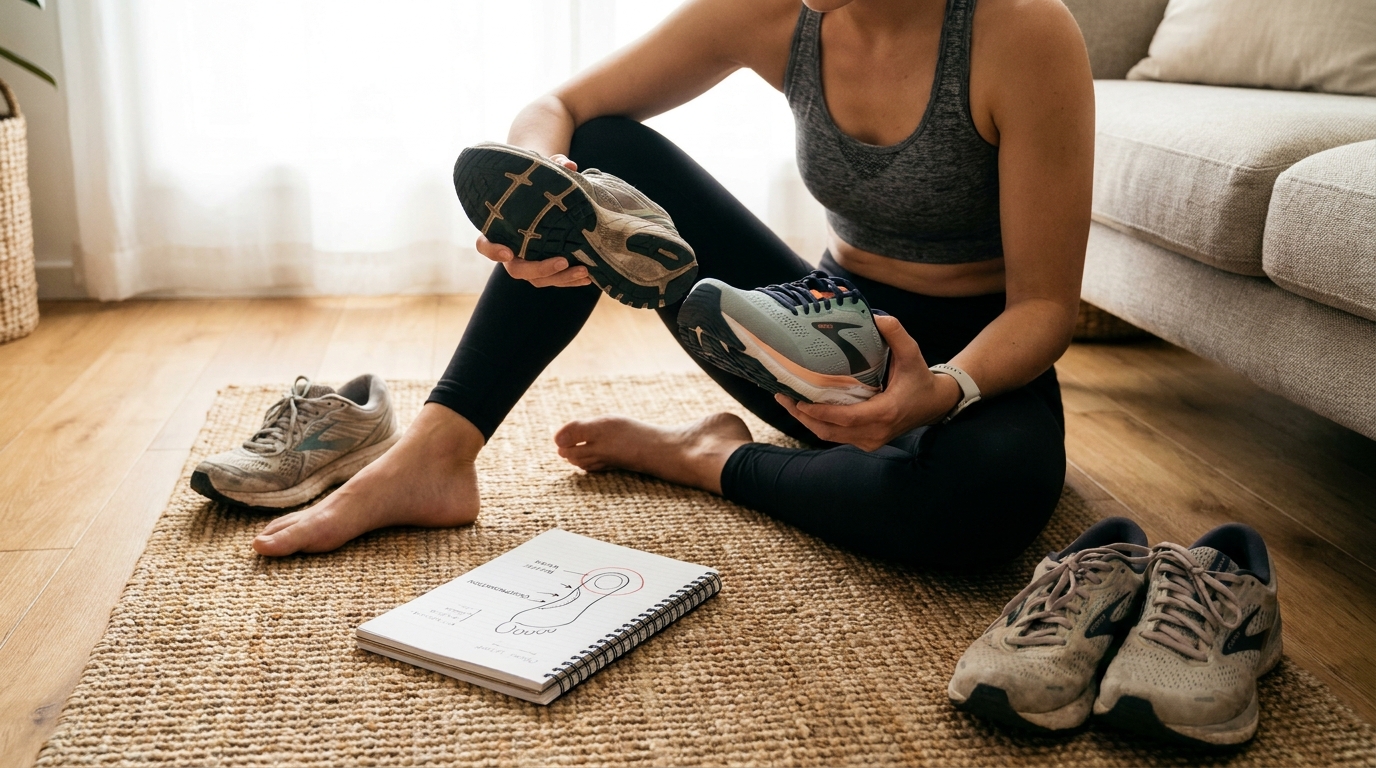
Expect the entire process to take about 20 to 30 minutes. You will typically run on a treadmill for a short burst while a staff member records your feet from behind. They may also scan your bare feet, ask about your running history, and have you try on several shoes. The session is informal and focused on finding a comfortable shoe. You usually leave with a recommendation and, if you choose, a purchase.
Professional Gait Analysis: Detailed and Multi-Step
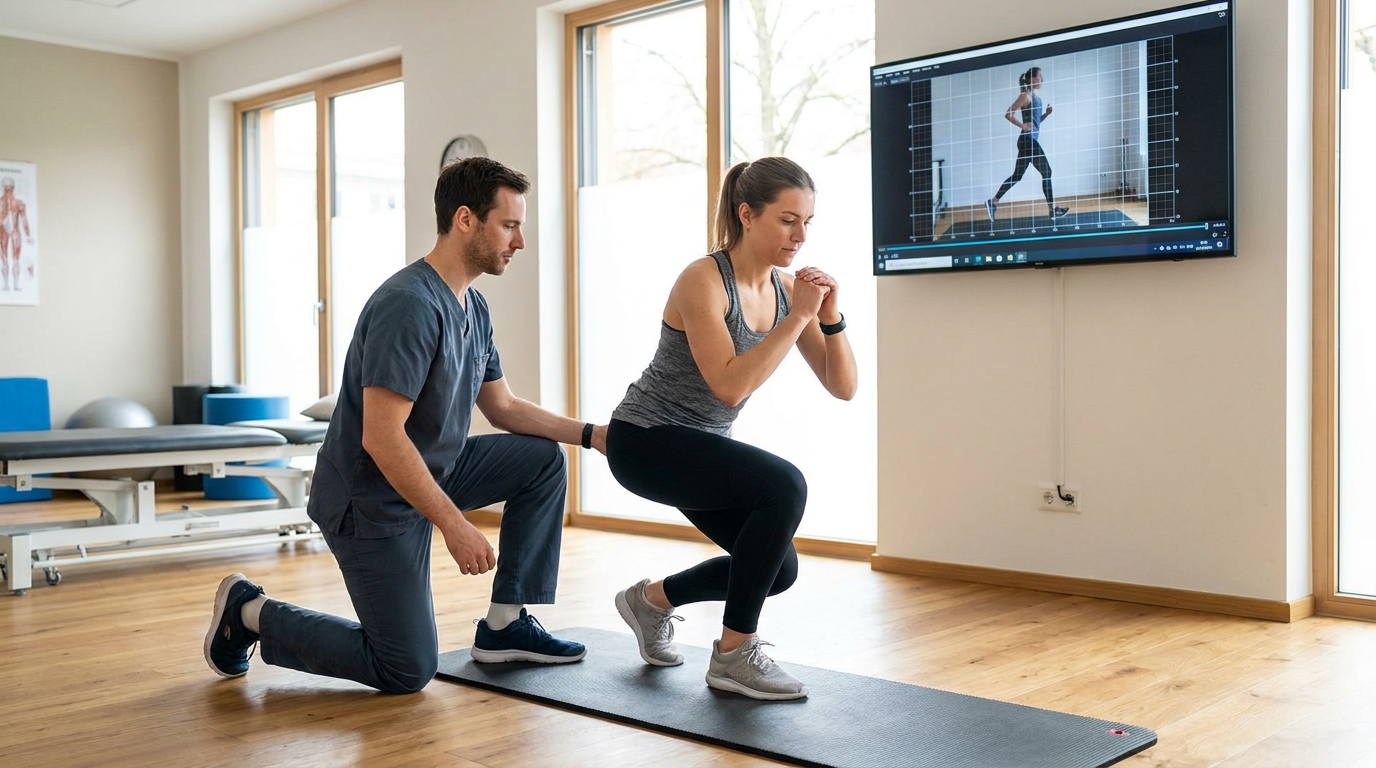
A professional session is longer—often 45 to 60 minutes or more. It begins with a conversation about your running history, injuries, and goals. Then we perform a physical examination: joint range of motion, muscle length tests, strength tests, and a movement screen such as a single-leg squat. Next, we observe you walking and running on a treadmill, recording video from at least two angles. Sometimes we use a metronome to assess cadence or ask you to run at different speeds. Afterwards, we review the video together, explain the key findings, and outline a plan—which may include exercises, manual therapy, or footwear suggestions. You receive a copy of the key frames or a summary to reference later.
Ready to Elevate Your Running?
Understanding the difference between a shoe store treadmill check and professional running gait analysis can save you time, money, and potential injury. If you are simply looking for a well-fitting shoe and have no pain, a store check is a reasonable first step. If you want to know why you move the way you do and how to improve, a professional analysis is the deeper, more actionable route. The best approach often combines both: get a professional baseline, then use in-store checks to compare shoes within the recommended category.
If you’re ready to look beyond the shoe and understand your running mechanics, book a professional gait analysis with our clinical team. We’ll help you move better and run with more confidence.