


Why does my back ache when I relax? Causes and solutions for rest-induced back pain often surprise people. Most of us expect rest to soothe an aching back, but sometimes lying on the couch or sinking into bed triggers exactly the discomfort we tried to escape. That pattern is common, and it usually points to a few specific, manageable factors rather than a single bad mattress.
We see this daily in our practice: patients who feel fine while moving but stiffen up the moment they sit still. Rest-induced back ache often stems from prolonged inactivity, unsupported postures, tight hip and leg muscles, or inflammatory conditions that flare with immobility. Below we break down the most common causes and practical ways to address them.
Common Causes of Back Ache During Relaxation
Prolonged Inactivity and Muscle Stiffness
When you stay still for long periods, the muscles that support your spine receive less blood flow and can become stiff. We often explain to patients that joints and tissues need regular movement to stay lubricated and supple. After sitting or lying for hours, the small muscles along the spine may tighten, making that first movement feel sore. This is not a sign of damage; it is a signal your back is hungry for motion.

Poor Posture and Unsupported Positions
Slouching on a sofa or propping your head on a too-high pillow can place uneven stress on spinal discs and ligaments. A relaxed posture often rounds the lower back and pushes the head forward, increasing pressure on the lumbar spine. Over time, this static load fatigues the muscles that hold you upright, leading to a dull ache even after you change position.
How Specific Relaxation Positions Strain Your Spine
- Lying on the stomach twists the neck and compresses the lower back.
- Side sleeping without a pillow between the knees allows the top hip to drop and rotate the pelvis.
- Curling into a tight fetal position shortens the hip flexors and can pull on the lumbar spine.
We encourage patients to notice which positions feel comfortable after five minutes and which ones lead to stiffness when they finally stand up.
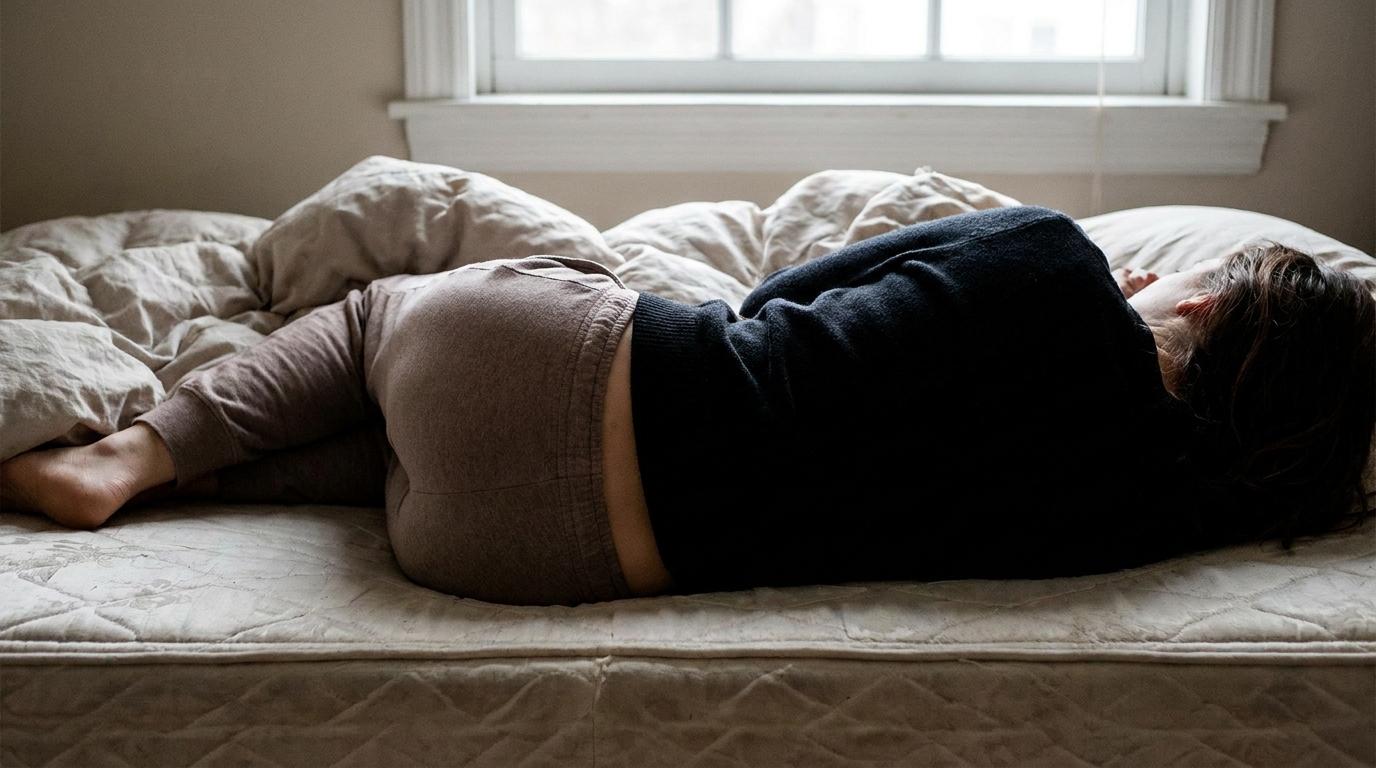
Stress, Muscle Tension, and Back Pain
Stress does not just live in your head. When you are anxious, your body often holds tension in the shoulders, jaw, and lower back. That baseline muscle guarding can become more noticeable when you try to relax, because the contrast between your intended rest and your body’s clenched state is sharper. A vicious cycle can develop: back pain increases worry, which increases muscle tension, which worsens the pain. Breaking that loop often requires both physical and mental strategies.
Inflammatory Conditions That Worsen with Rest
Some people have back pain that improves with movement and worsens the longer they stay still. This is a hallmark of inflammatory back pain, such as ankylosing spondylitis or related conditions. Unlike mechanical pain from a strain, inflammatory pain often wakes people in the second half of the night and eases after 30 minutes or more of gentle activity. If you consistently feel worse after rest and better after moving, that pattern deserves a professional assessment.
Tight Hip Flexors and Hamstrings: A Hidden Culprit
Muscles in the front of the hips (hip flexors) and the back of the thighs (hamstrings) directly influence the tilt of your pelvis. When those muscles are tight from prolonged sitting, they can pull the pelvis out of neutral and transfer strain to the lumbar spine. We often find that patients with rest-induced back ache have significant tightness in one or both of these muscle groups, even if they do not feel pain in the hips or legs themselves.
Effective Ways to Relieve Rest-Induced Back Ache
Simple Stretches and Movement Breaks
The single most effective thing you can do is break up stillness before it builds into pain. Set a timer to stand and walk for two minutes every 30 to 45 minutes of sitting or lying. Gentle mobility work can also help. Below are three movements we regularly recommend:
- Knee-to-chest: lie on your back, bring one knee toward your chest, hold for 10 seconds, switch sides. This eases lumbar stiffness without forcing the spine.
- Pelvic tilts: with knees bent and feet flat, gently flatten your lower back against the floor, hold for 3-5 seconds, release. Repeat 8-10 times.
- Cat-cow: on hands and knees, alternate between rounding and arching your spine slowly for 6-10 breaths. This restores comfortable range of motion.

Optimizing Your Relaxation Environment
Your couch or bed does not need to be expensive, but it should support your spine in a neutral position. If you sink deeply into a soft sofa, your lower back rounds excessively. A firmer sitting surface or a small lumbar roll can keep the natural curve of your lower back. For sleep, a pillow that keeps your head in line with your spine and a knee pillow for side sleeping can reduce rotational strain. We also suggest checking mattress age: most lose support after 7-10 years, but the key is whether you wake up feeling stiff or refreshed.
Improving Your Relaxation Posture
There is no single perfect posture, but some positions are gentler on your back than others. When sitting, keep both feet on the floor and your sit bones evenly weighted, with a slight forward tilt at the hips. Avoid tucking your legs under you or twisting to one side for long periods. If you like to lie down, place a pillow under your knees when on your back, or between your knees when on your side. These small supports help your spine stay aligned while your muscles actually let go.
When to Seek Medical Advice for Back Pain That Worsens with Rest
Recognizing Red Flags and Serious Symptoms
Most rest-induced back ache responds well to movement and posture changes. However, certain patterns warrant a professional evaluation. We pay close attention when patients describe:
- Pain that consistently wakes them from sleep or is unrelenting at night.
- Morning stiffness that lasts longer than 30 to 60 minutes.
- Back pain accompanied by fever, unexplained weight loss, or night sweats.
- Numbness, tingling, or weakness in one or both legs.
- Pain that began after a fall, accident, or sudden trauma.

Having worked with over 4,000 patients, we know that early, accurate diagnosis makes a real difference in how quickly rest-induced back pain resolves. If your back ache follows any of the patterns above, a thorough assessment can rule out inflammatory or structural causes and get you moving comfortably again.
If rest is making your back ache more, you do not have to live with it. Small changes to your posture, movement breaks, and support setup often help within days. When they do not, we are here to help you find the underlying reason and build a plan that works for your body.